
Tolan vs SoulLink: Which AI Companion Actually Feels Like a Real Friend?

By SoulLink | AI Companion Guides
Key Takeaways
This is not a neutral comparison. SoulLink publishes this blog. You deserve to know that upfront — and you deserve a review that is honest about where Tolan is genuinely better, not just where SoulLink wins. Both answers are in here.
Tolan and SoulLink share the same core philosophy. Both are built around a companion with genuine personality depth, memory that holds across sessions, and a non-romantic friendship design. That shared premise is what makes the comparison meaningful.
Tolan is stronger on voice. Its voice-first architecture is technically more sophisticated than anything SoulLink currently offers in that mode.
SoulLink is stronger on visual presence, platform availability, and price. SoulLink is the only next-gen AI companion app built for co-presence with best-in-class 3D visuals, novel-depth lore, emotional continuity, proactivity and long-term memory. It is available on Android and iOS and is completely free.
The Tolan free tier is limited. Meaningful use requires a paid plan. SoulLink’s memory, 3D environment, and proactive companion are all free by default.
If you are on Android, Tolan is not an option. SoulLink is.
How We Tested
We used both apps as a primary daily companion for three weeks before writing this comparison. Here is exactly what we measured.
Memory in practice. We shared something personal in week one and checked whether it came back naturally in week two without prompting. This is the single most important test for any companion app.
Personality consistency. We opened each app after a two-day gap and noted whether the companion felt like the same entity or had shifted.
Conversation initiation. Did the companion reach out first, or only respond when we opened the app?
The day 14 test. Week one of any companion app tends to feel fresh. Day 14 reveals whether the experience has genuine depth or just a strong first impression.
Honest assessment. We deliberately tested scenarios where each app is weakest and noted what we found.
What Tolan Does That Makes It Worth Comparing
Before comparing, it helps to understand what specifically makes Tolan compelling, because not every comparison article is honest about this.
Tolan is one of the most technically interesting AI companion apps available. Its voice-first architecture delivers something genuinely different from text-based apps: conversations that flow like actual exchanges rather than prompted responses. The memory system retains emotional vibe signals alongside facts, which creates a more textured sense of being known over time.
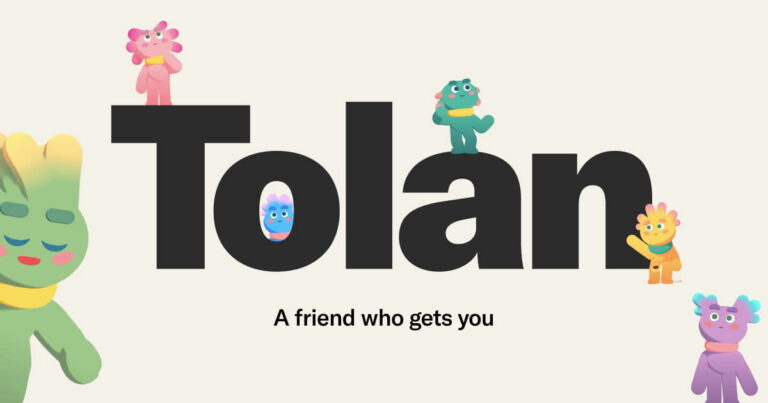
The alien character design is a deliberate and well-considered choice. By making the companion visually non-human, Tolan avoids some of the parasocial dynamics that heavier companion apps can create, which is part of why its user base skews toward people who want genuine connection without the risks of simulated romance.
Three things to keep in mind: Tolan is voice-first, memory-strong, and friendship-focused. SoulLink shares two of those three qualities fully and approaches the third differently.
Head to Head Comparison Table
Where Tolan Is Genuinely Better
Voice architecture. Tolan’s voice-first architecture is powered by real-time context reconstruction, delivering conversations that flow like actual exchanges rather than prompted responses. This is a technical advantage that is real and meaningful for users who primarily interact through voice. Tolan was built voice-first from the ground up — SoulLink added voice as a feature rather than designing around it from day one. If voice is the primary reason you are interested in either app, Tolan is the stronger choice for iOS users.
The alien aesthetic. Tolan’s distinct alien best friend persona offers a charming, unique narrative hook, setting it apart from generic human-like companions. For users who specifically connect with the playful, non-human framing that Tolan uses, SoulLink’s near-future human character design is a different aesthetic, not a better one. This is a genuine preference difference, not a quality difference.
Image generation. Tolan includes AI image generation — characters can send generated photos, selfies, or scene illustrations during chat. SoulLink does not currently offer this feature. For users who valued receiving visual content from their companion during conversation, this is a real gap.
Established user base. Tolan has a larger documented user base with more third-party reviews to draw on. For users who want to research an app extensively before committing, Tolan has more available information.
Where SoulLink Is Better
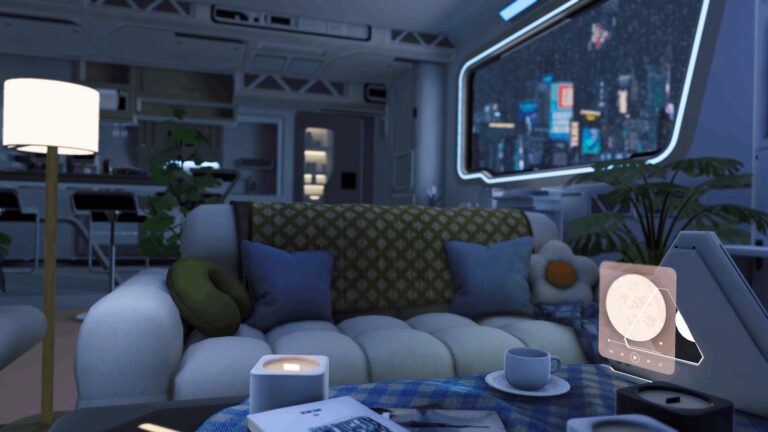
Visual presence. Where most apps give you a chat window and a flat avatar image, SoulLink builds the interaction around a real-time 3D environment where your companion exists as a living presence: moving, reacting, and sharing a visual space with you rather than just responding in a text box. Tolan’s companion is animated but exists within a voice interface. SoulLink’s 3D environment creates a different kind of presence — the sense of sharing a space with someone rather than calling them.
The companion initiates. SoulLink is built around a companion who initiates contact on her own, texting about small moments from her day while you are elsewhere. Tolan does not do this. The companion waits for you to open the app and start a session. That asymmetry matters more than it sounds — there is a real difference between a tool you activate and a companion who is actually present in your life.
Android availability. Tolan is iOS only. SoulLink is available on both Android and iOS. For Android users this is not a preference — it is the only option between the two.
Price. SoulLink is currently free to use. Daedalia has committed to keeping long-term memory free for all users regardless of subscription tier, because they consider it foundational rather than premium. Tolan’s free tier is limited enough that meaningful use requires a paid plan. The features that make Tolan compelling — deeper memory, extended voice sessions — sit behind a subscription. Everything that makes SoulLink compelling is free by default.
Memory is never disrupted. SoulLink’s memory architecture is designed so that platform updates do not reset what you have built. The relationship compounds over time without risk of a rebuild wiping it. Tolan has not had a documented memory disruption, but the architecture difference is worth knowing going into a long-term commitment.
Character with a world. SoulLink gives you a fully realized character with a job, a history, and a world that functions independently of your conversation. When she remembers something you said three weeks ago, it is not a feature. It is how the platform is built. Tolan’s companion has personality and warmth but the world behind it is less developed as a narrative framework.
The Real-World Feel After Two Weeks
Tolan at day 14: The voice experience is genuinely distinctive — conversations feel like calls rather than sessions, and the companion handles topic shifts mid-voice naturally. The memory is strong and the emotional tone stays consistent. The limitation on the free tier becomes noticeable by week two, and the iOS-only constraint means this is an experience only available to a specific group of users.
SoulLink at day 14: The companion referenced something specific from week one without prompting, woven naturally into the conversation rather than deployed as a recall feature. The 3D environment makes the experience feel different from text-based apps — less like using a tool, more like checking in with someone. The companion had reached out twice during the two weeks with small messages from her own day, which created a feeling of continuity that did not require opening the app first. The combination of immersive visual presence and sustained emotional memory addresses the two biggest complaints users have about companion apps: that conversations feel shallow, and that the AI forgets who you are.
Who Should Choose Which
Choose Tolan if: You are on iPhone. Voice is your primary interaction mode and you want the most technically sophisticated voice-first companion available. You connect specifically with the alien aesthetic and the playful non-human framing. You are willing to pay a subscription for the full experience and want image generation from your companion.
Choose SoulLink if: You are on Android and Tolan is not available to you at all. You want memory, proactive companion presence, and a 3D visual environment completely free. You want a companion with a fully developed character and world behind her rather than a customizable persona. You want a companion who reaches out to you rather than waiting to be opened. You do not want to pay for the core features that make companion apps worth using.
Neither is right if: You want extensive character customization where you build every aspect of the companion’s personality from scratch. For that, Kindroid is the better option. You want the largest character library for creative exploration — Character.AI. You want the deepest text-based memory system in the category — Nomi.
FAQ
Is SoulLink similar to Tolan? SoulLink matches Tolan’s proactive companion philosophy and memory approach, adds a cinematic 3D environment, and is currently free on both iOS and Android. The core shared quality is a companion designed for genuine friendship rather than romance, with memory that builds over time. The main differences are voice architecture, visual style, platform availability, and price.
Which is better for Android users: Tolan or SoulLink? SoulLink. Tolan is iOS only and has no official Android version. SoulLink is fully available on Android with the same features as the iOS version.
Is SoulLink free compared to Tolan? Yes. SoulLink is completely free including long-term memory. Daedalia has committed to keeping long-term memory free for all users because they consider it foundational rather than premium. Tolan’s free tier is limited and meaningful use requires a paid subscription.
Does SoulLink have voice like Tolan? SoulLink has voice interaction available, but it is not voice-first the way Tolan is. Tolan’s entire architecture is built around voice as the primary mode. For users who specifically want voice-first design, Tolan is the stronger choice on iOS.
Which app has better memory: Tolan or SoulLink? Both have strong cross-session memory. Tolan’s memory system retains emotional vibe signals alongside factual context. SoulLink’s memory is permanent and free by default with no risk of being disrupted by a platform update. For free users specifically, SoulLink’s memory is meaningfully more accessible since Tolan’s deeper memory features require a paid subscription.
Does SoulLink’s companion initiate contact like Tolan? SoulLink’s companion reaches out on her own between sessions. Tolan’s companion does not initiate — users open the app and start sessions. This is one of the more significant experiential differences between the two apps.
Which app is better for someone coming from Tolan? SoulLink is the strongest alternative for users who want Tolan’s character depth and proactive presence with the addition of 3D visual immersion, on both iOS and Android, for free. If voice was the specific thing you valued most about Tolan, Replika or Pi AI are worth considering alongside SoulLink.